A phone at the fence can catch a team photo and a celebration. It rarely catches the play itself, the catch at full stretch, the strike of the ball, the moment a race is actually won. The gap is not sentiment about professional gear. It is physics and prediction: fast action in poor light, moving away from you, decided in fractions of a second that consumer cameras are not built or positioned to answer.
From NASCAR and NHRA events to Carolina Panthers coverage and local high school games around Concord, sports photographers work a repeatable method. Seeing how that method works explains both the images and why schools, teams and families hire it done rather than hoping a spectator's phone gets lucky.
Speed and light, the hard combination
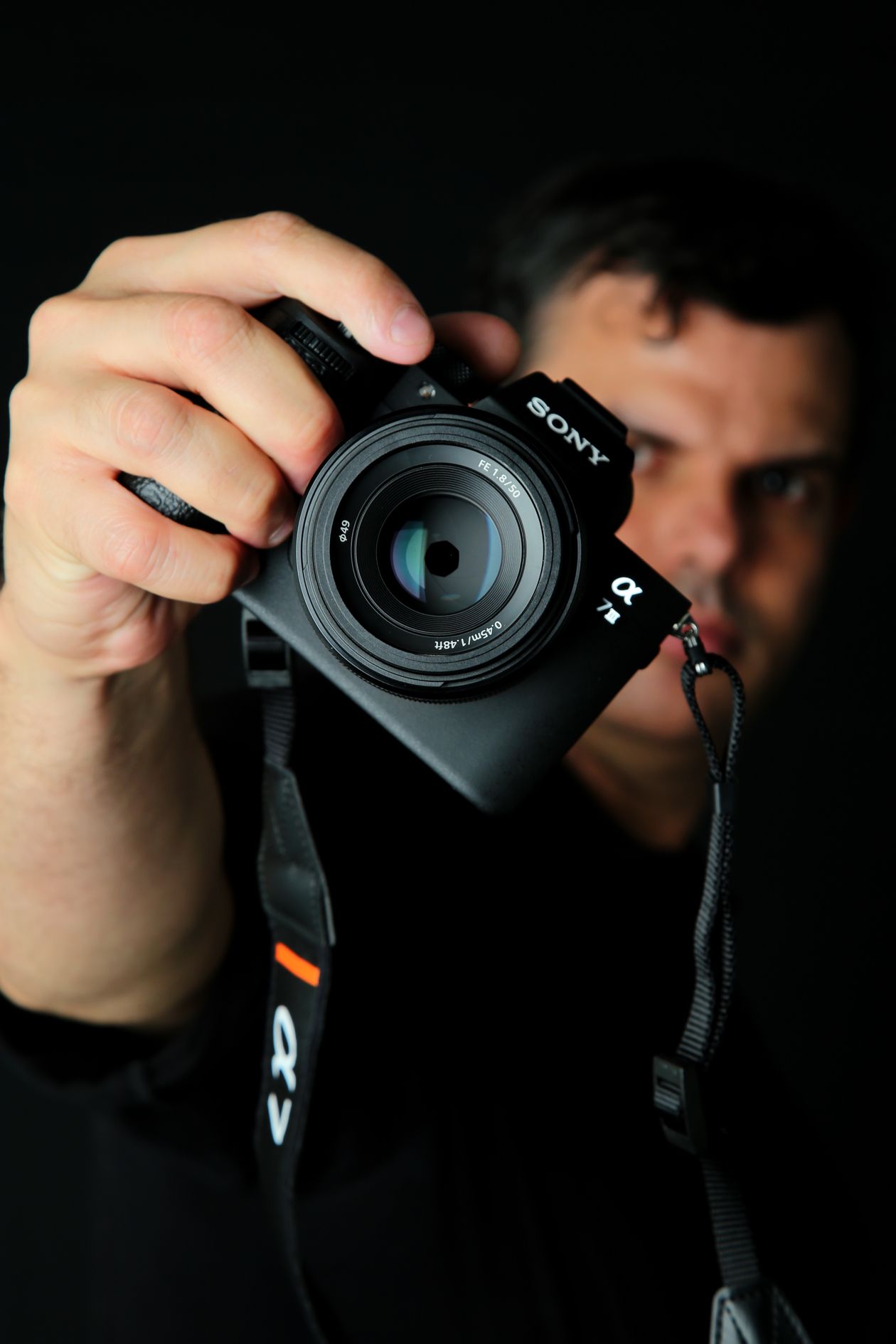
Freezing action takes a fast shutter, around a thousandth of a second for running, jumping and motorsport at full pace. Fast shutters let in little light, and much school and community sport happens at dusk or under lights that look bright to your eyes and dim to a camera. Professional lenses gather several times more light than a phone or a kit lens, and professional bodies stay sharp and clean at sensitivity settings where smaller cameras dissolve into grain.
That combination matters most at exactly the moments people want photographed: night games, indoor gyms, evening races. A daytime Saturday game is forgiving and a decent camera in good hands does fine. A Friday night game in November in Cabarrus County is where the equipment and experience gap stops being subtle and becomes the whole story.
Position and anticipation
Sports photographers shoot the play before it happens. They read body shape, game situation and habit: where a quarterback looks before throwing, which base a runner will test, where a car will be at the apex of a corner. By the time an untrained eye confirms the action, the decisive frame is already past. That anticipation is built over hundreds of games and it cannot be downloaded with a bigger lens.
Position is the other half. Credentialed photographers work from spots spectators cannot stand in, low at the fence line, beyond the end zone, at trackside points where the action fills the frame instead of arriving as a distant speck to be cropped. Much of sports photography is negotiating the right place to stand, then having the discipline to stay with a play instead of watching it like a fan.
What you actually receive
A working photographer may shoot hundreds or thousands of frames at an event and deliver a tight, edited set. That ratio shocks people until they consider it: at full speed, even a pro's sequence contains near misses, blocked views and the back of a referee's head. Culling and editing, color under mixed stadium light, straightening, cropping for impact, is skilled work that happens after everyone else has gone home.
For a family, the practical offer is simple: one game, covered properly, produces a handful of images of your athlete that no vantage point in the stands could have made. For a school or sponsor, the same coverage produces a season of usable images for programs, social posts and local papers, which is why the Independent Tribune and other publications have long relied on photographers who specialize in exactly this.
There is a courtesy layer to this work too. Sideline photographers stay aware of officials, coaches and players, shoot without interfering, and know the rules their credential carries at each venue, from high school fields in Cabarrus County to professional paddocks. That professionalism is part of what a school or a team is buying, because one careless photographer in the wrong place can cost every photographer their access for the rest of a season.
Common questions
Can a photographer cover my child's whole team or just one player?
Both are common. Whole team coverage spreads the images across everyone, while a player focus follows one athlete closely through a game. Ask which suits your goal.
Why do night game photos from phones look grainy?
Phones raise sensitivity to cope with low light and fast motion, which adds grain and blur. Professional lenses and bodies are built for exactly that combination.
How soon do we get the photos after a game?
It depends on the event size and the editing load. Ask at booking; event work is usually turned around far faster than wedding or portrait galleries.
Photos in this guide are representative stock images.
← All guides from Michael A Anderson Photography← Back to Michael A Anderson Photography